

Theorycrafting obsession in emerges from a system design that resists complete understanding. Unlike games where optimal solutions are quickly solved, Path of Exile offers layers of interaction that multiply rather than converge.
Skills interact with passives, items, mechanics, timing, and encounter design in ways that create emergent behavior rather than predictable outcomes. For many players, this depth becomes irresistible. Theorycrafting evolves from a tool for improvement into an ongoing intellectual pursuit, where understanding is never final. Each answer reveals further questions, sustaining engagement far beyond direct gameplay.
Why No Build Ever Feels Truly Finished
Builds in Path of Exile rarely reach a point of absolute completion because the system continually offers alternative interpretations of effectiveness. A build that functions well today may reveal inefficiencies tomorrow when a new interaction is discovered.
This impermanence fuels obsession, as players chase refinement rather than closure. Even small numerical changes can ripple through mechanics in unexpected ways, altering breakpoints or enabling entirely new synergies. The absence of finality encourages continuous experimentation, making theorycrafting a process rather than a destination.
Skill Interactions Creating Emergent Complexity
The true depth of theorycrafting lies in emergent interactions that are not immediately obvious. Skills interact with one another indirectly through shared systems such as scaling types, conditional triggers, and resource management.
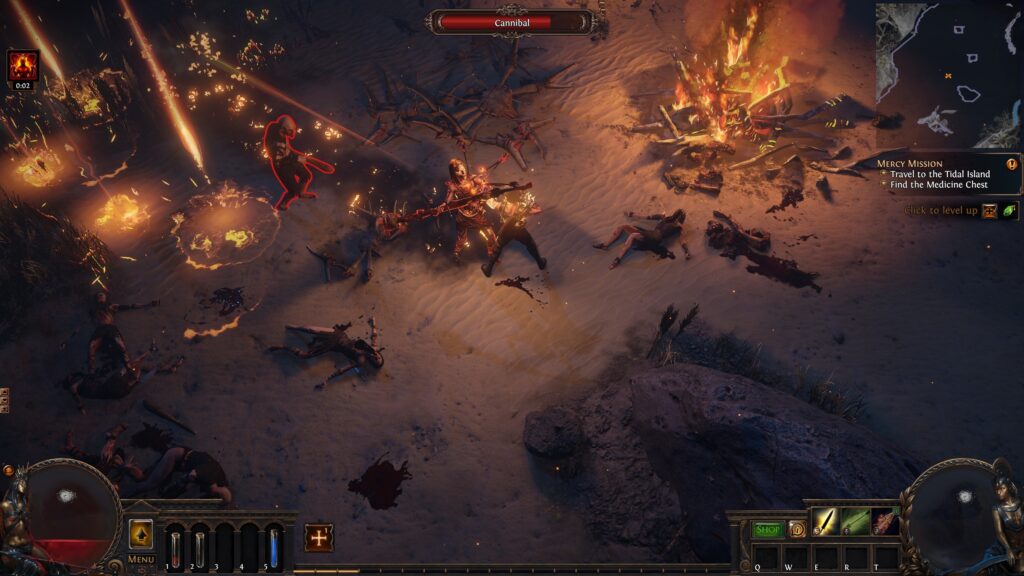
These interactions often produce results that exceed the sum of their parts. Players who uncover such combinations feel a sense of discovery comparable to solving a puzzle. This emergent complexity ensures that understanding is earned through exploration rather than instruction, reinforcing long-term engagement.
Community Amplifying Obsession
Theorycrafting obsession rarely exists in isolation. Community discussion, shared experiments, and public discoveries amplify curiosity. When one player uncovers an interaction, others test its limits, refine it, or challenge its assumptions. This collaborative analysis accelerates knowledge while simultaneously expanding its boundaries. Each shared insight becomes a starting point rather than a conclusion. The collective nature of theorycrafting ensures that depth grows faster than any individual can exhaust.
Why Theorycrafting Never Reaches an Endpoint
Several factors ensure that theorycrafting remains effectively infinite.
- Multiple scaling systems interacting simultaneously
- Context-dependent effectiveness across content types
- Balance changes reshaping assumptions each league
- Player creativity redefining intended use cases
Together, these factors prevent stagnation and keep discovery ongoing.
The Cost and Reward of Obsession
While deeply rewarding, theorycrafting obsession can also consume time and mental energy disproportionate to tangible gains. Players may spend hours refining hypothetical improvements that offer marginal real-world benefit.
Yet for many, this pursuit is itself the reward. The satisfaction comes from understanding, not just performance. Theorycrafting transforms Path of Exile into an intellectual playground where curiosity is continually rewarded.
Conclusion
Theorycrafting obsession thrives in Path of Exile because skill interactions offer infinite depth rather than finite solutions.
Each discovery opens new avenues for exploration, sustaining engagement beyond gameplay alone. In this system, mastery is never complete, ensuring that curiosity always has somewhere to go.
